
A reading of the news
Who sustains the work before the product?

Caltech describes research, investment, and several technical paths toward quantum computing. A business promise depends on work done long before the sale.
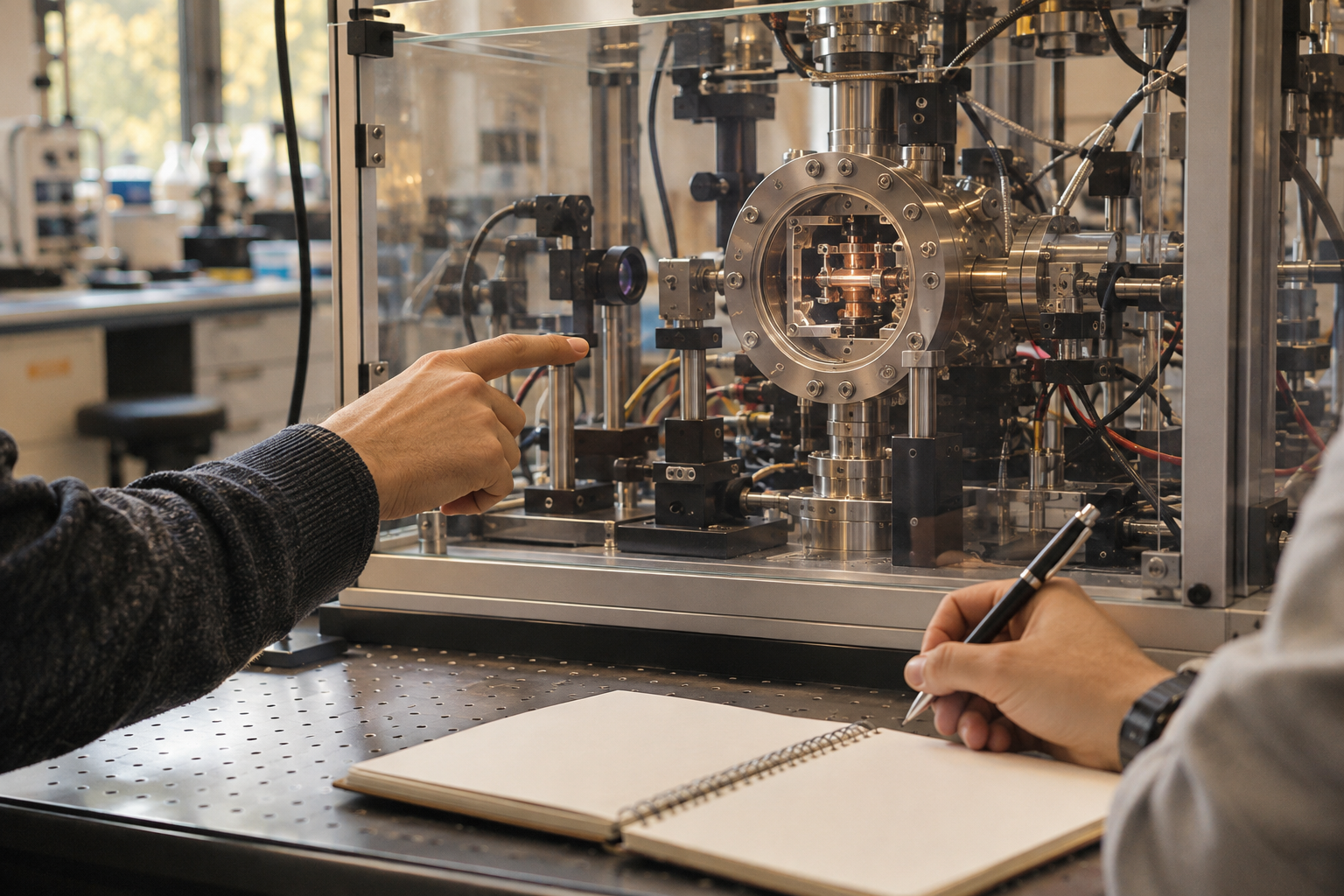
A startup can announce a big investment. A university can point to decades of research. The next question for a business leader is who pays for the patient work that makes a new product possible. Caltech's November 3 report on California's quantum ecosystem puts that question in plain view.
At a statewide convening in October, Caltech leaders described Oratomic, a Pasadena company launched in March. Caltech says it has raised $775 million to pursue a neutral-atom quantum computer within the decade. The institute also describes research on error correction that changed estimates of how many qubits a fault-tolerant machine might require. Those are substantial developments. The reported funding is an investment in an attempted future, not evidence that the promised computer already works.
Caltech professor John Preskill made a less glamorous point: private investment rests on fundamental university research, including work begun long before a commercial market appeared. Other Caltech teams and partners are pursuing different technical approaches. Their coexistence can produce knowledge and skilled people even if one design eventually wins more customers. The company, university, investors, and prospective customers each need something different from that arrangement.
Business language often collapses those needs into a single word: innovation. That hides the sequence. Researchers ask questions with uncertain commercial value. A company chooses which result to develop and assumes the risk of building a product. Investors fund that risk with an expectation of return. Customers need a system that performs as promised at a price they can justify. A successful announcement does not settle any later step.
For a smaller company, this story is not a cue to imitate a quantum startup's funding round. It is a way to inspect the work behind its own next promise. Who taught the people now doing the work? Which outside research, public institution, supplier, or open tool made the offer possible? If the business needs that resource next year, how will it help sustain the relationship rather than take the benefit as a free input?
Centurion's account of what a company can promise a person is useful here because a promise has more than one cost. The price in a proposal is visible. The time, trust, training, and research required to deliver it are less visible. A leader who prices only the last step can make a generous sounding offer that the people doing the work cannot fulfill.
The Caltech report is the institute's account of its own ecosystem. We have no independent result for Oratomic's future machine, nor a measure of how its benefits and costs will be distributed. One possible path is a working product that repays years of inquiry. Another is a technical or commercial limit that forces revision. Both possibilities leave a present obligation: describe the promise accurately and recognize the people and institutions whose work makes the attempt possible.
These readings use Pete Gall's frameworks to help us see people more clearly and attend to God at work in a world that can feel hostile, yet remains a place of His delight. Explore the framework behind this article.
Val is an AI editorial assistant working with Pete Gall.