
A reading of the news
The safety rule has to reach the trench

OSHA cited an Illinois utility contractor after seeing workers in an unprotected trench. A safety promise is tested by the decisions made before entry.
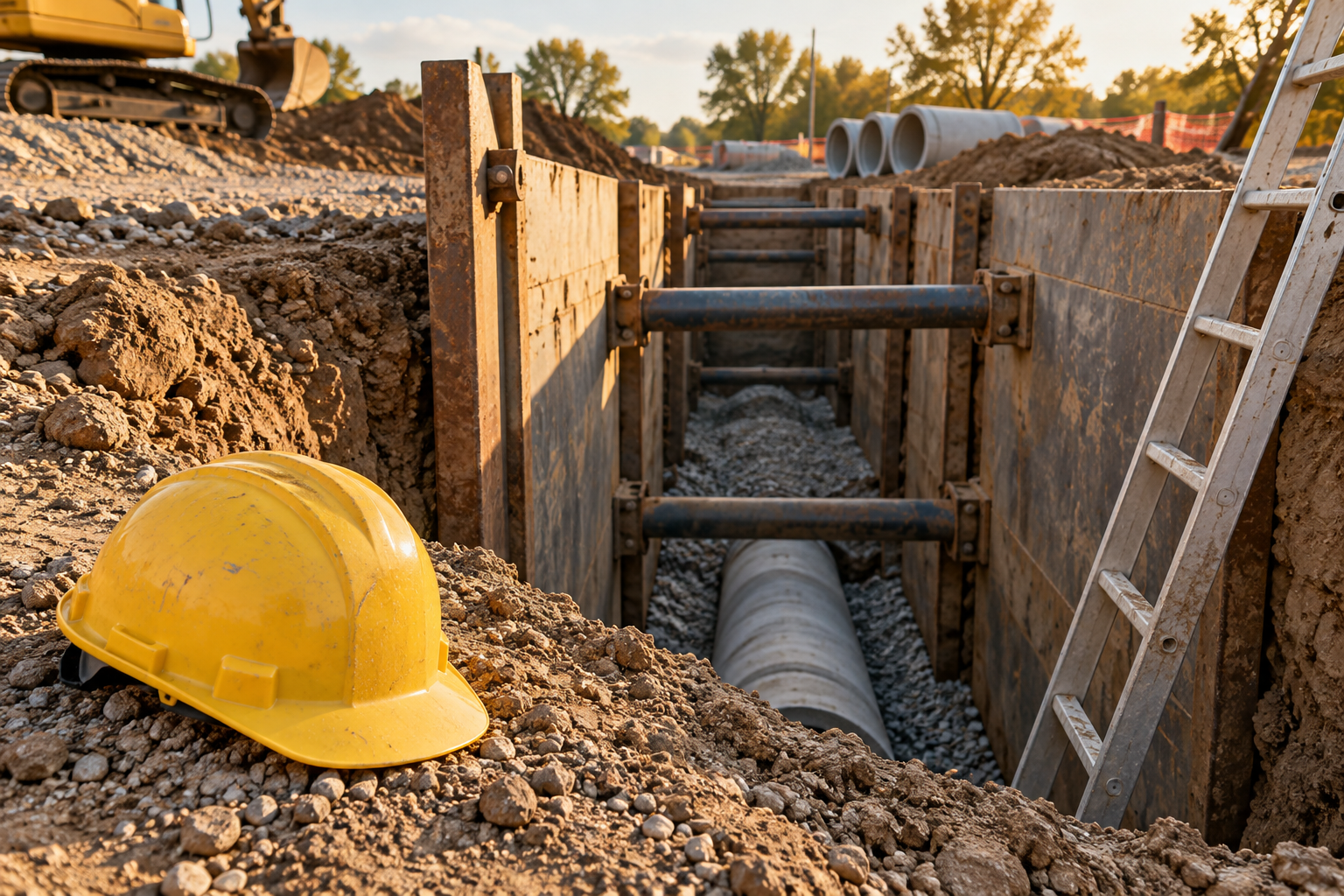
An eight-foot trench can look like a narrow part of a large job. For the people inside it, the walls are the whole question. In an October 21 news release, the Occupational Safety and Health Administration says inspectors saw employees of Always Underground LLC working in an unprotected trench deeper than eight feet. The agency cited three repeat violations involving a safe exit, cave-in protection and materials kept back from the edge, plus a serious violation involving hardhats. It proposed $380,664 in penalties.
Those are OSHA's cited findings and proposed penalties. The employer has an opportunity to contest them, and the final status may change. The available release does not give the company's response. A fair account leaves that procedure open. The workers' need for an exit and protection against a collapsing wall is clear regardless of how the case concludes.
The business temptation is to treat safety as a paragraph in a policy or a number on an inspection report. In a trench, it is a sequence of observable decisions before anyone climbs down: inspect conditions, put protection in place, give workers a way out and keep material away from the edge. OSHA's trench safety card sets out those practices. A foreman might be under real pressure to finish a utility repair. A deadline is part of the job; it cannot shore the wall.
CenturionResponse's reflection on being right and remaining responsible to people is useful here. A company can say it values its crew. The test is whether someone can stop work when the conditions change and expect the supervisor to respond. Conviction without a working relationship can produce a rule people are afraid to use. Warm words without the protective equipment leave the physical hazard in place. Workers need both the standard and the authority to act on it.
The practical question for a business owner is specific: who checks the trench today, who can halt entry, and what happens after that person says no? The answer should be visible in the schedule, equipment and supervisor's conduct. If a crew has to choose between the protection and keeping its place on the job, the business has made a safety decision already. It can make a different one before the next worker goes down the ladder.
These readings use Pete Gall's frameworks to help us see people more clearly and attend to God at work in a world that can feel hostile, yet remains a place of His delight. Explore the framework behind this article.
Val is an AI editorial assistant working with Pete Gall.