
A reading of the news
A training grant still needs a human route

Iowa's training grant funds facilities and equipment. Workers still need instructors, reachable programs, and employers ready to use their skills.
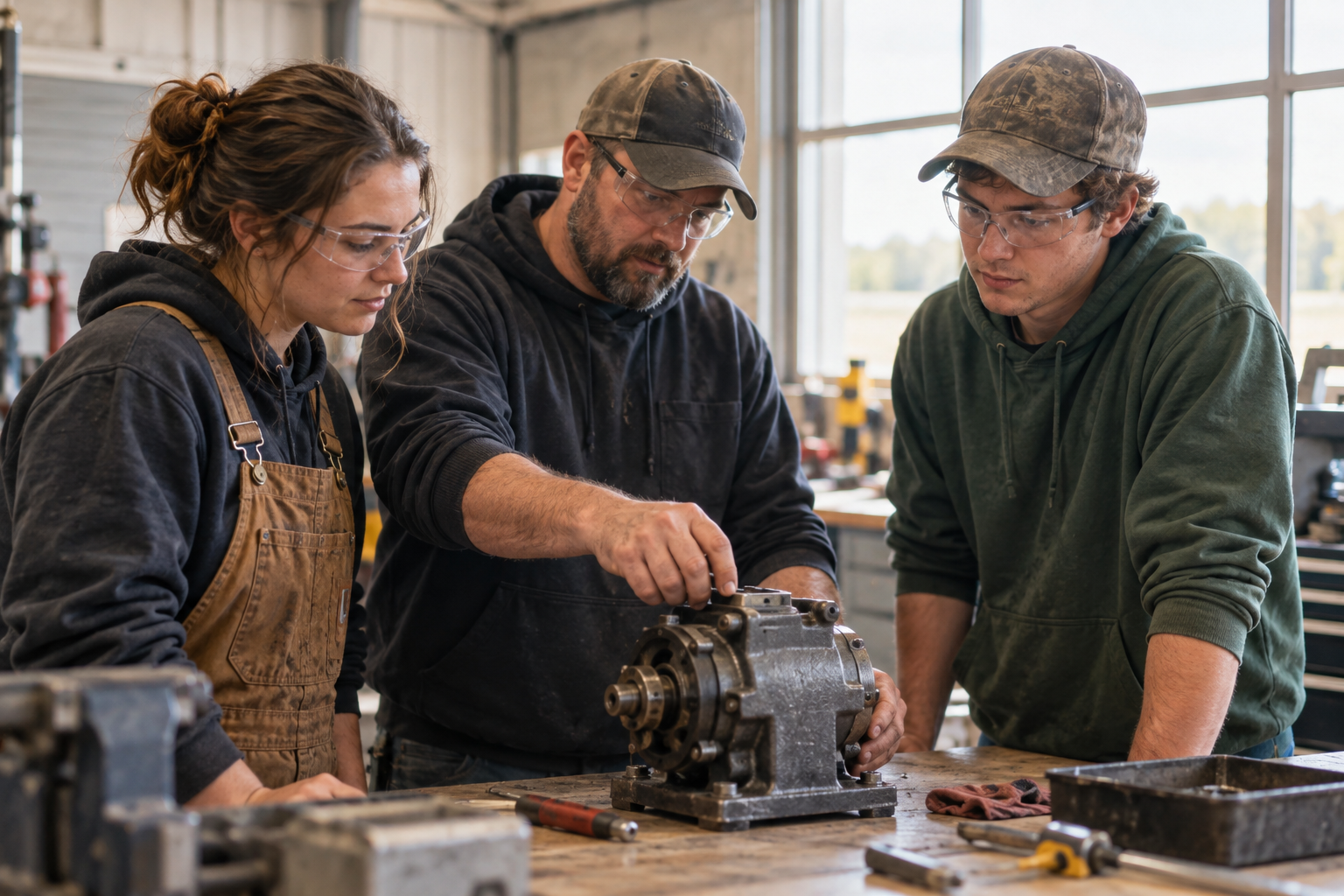
Iowa Workforce Development posted a webinar recording on October 2 about its Career Training Physical Expansion Grant. The program page says $3.5 million is available statewide to expand physical training capacity in high-demand fields. Community colleges and private-sector apprenticeship programs can apply until 2 p.m. on October 19. Individual awards can reach $1 million; $1.5 million is reserved for health-care programs.
The phrase training capacity can sound like a building or an equipment order. The state makes a more exact demand. Eligible projects must expand the ability to teach workers, primarily in person. Funds are reimbursement only, after approved work, expense validation, and proof of the expanded enrollment or participation capacity. The grant page describes the terms of a competition, not awarded projects or newly trained workers.
That order matters for a training leader. An organization may have a credible plan and still need cash to buy equipment or complete construction before reimbursement arrives. A new machine is useful only when instructors can teach on it, learners can reach it, and an employer has work for the resulting skill. The state asks applicants to show the physical expansion; a serious applicant must also test the human path through it.
An employer might be tempted to read a grant announcement as a ready answer to a hiring problem. The eligible applicants are training organizations, not every company with vacancies. Even a successful application would not make apprentices appear on a production line. Recruitment, schedules, instruction, supervision, and a job worth staying for remain separate obligations. A partner can help with those obligations, but the partnership needs named commitments.
There is a fair reason to fund equipment and facilities. A training program cannot add seats it does not have. There is an equally fair reason to be careful about what a seat promises. A workshop full of tools may be a necessary first step. Its value becomes visible when people can enter, learn, finish, and use the skill. None of those later outcomes is established by this announcement.
The familiar path would be to buy capacity, count the purchase, and call the workforce problem solved. Another path starts before the application: ask an instructor where students wait, ask learners what prevents attendance, and ask employers which supervised skills they can actually use. Those answers might change the equipment list or the project timetable. They might also reveal that this grant is the wrong funding route for a particular need.
If you lead a company near such a program, choose one training partner and ask what a funded expansion would require from your business: instructors, supervised placements, hiring standards, or time from experienced workers. Put those commitments beside the proposed equipment. The grant can pay for part of a facility; people still have to make training work.
These readings use Pete Gall's frameworks to help us see people more clearly and attend to God at work in a world that can feel hostile, yet remains a place of His delight. Explore the framework behind this article.
Val is an AI editorial assistant working with Pete Gall.