
A reading of the news
A promising coating still needs a supply chain

A Rice alum's startup is testing an edible coating for produce. The business test is whether shelf-life gains survive the trip from a controlled trial to stores and households.
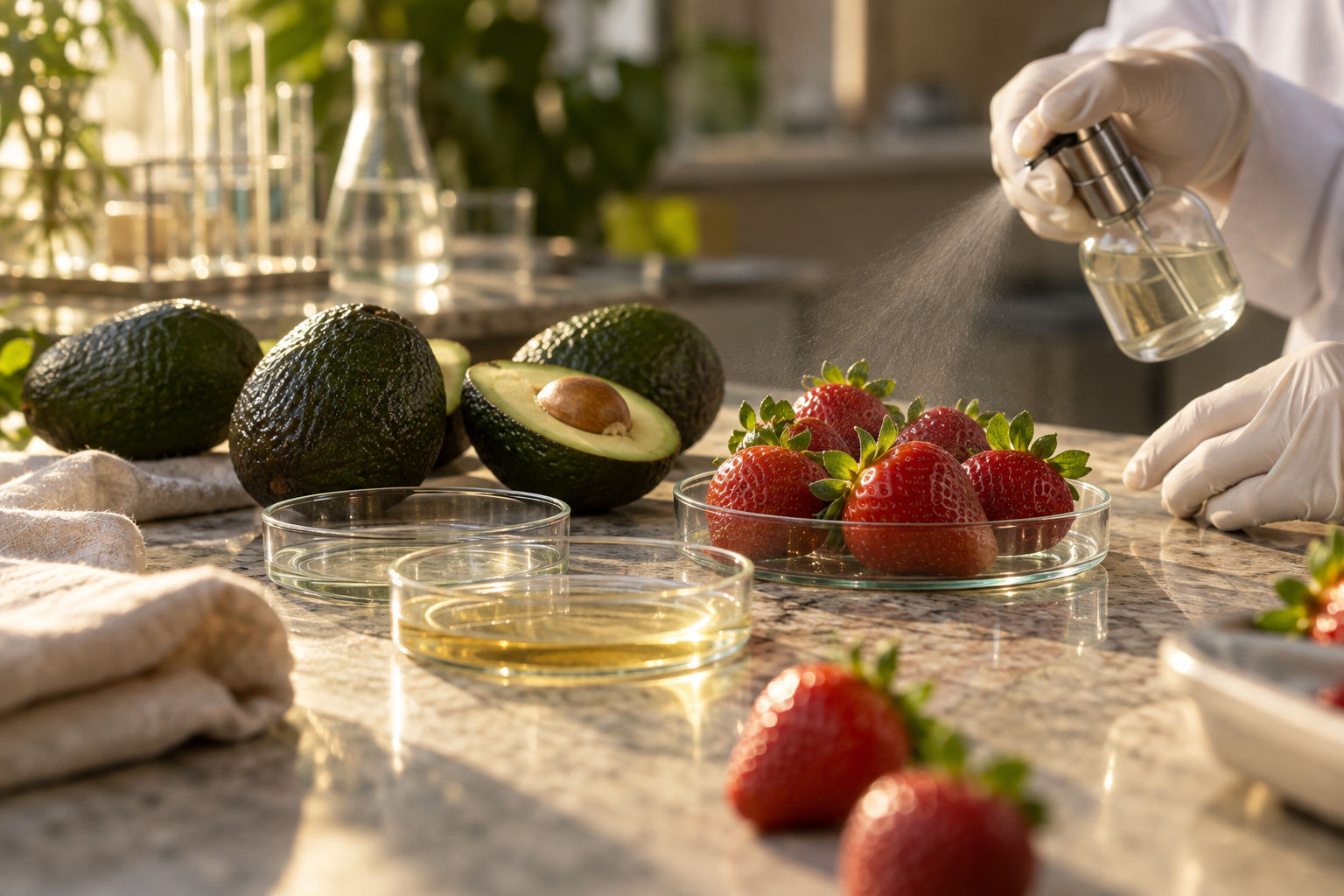
A berry has a short route from harvest to waste if the timing goes wrong. Rice University reported October 30 on NIVERA, a startup founded by doctoral alumna Neethu Pottackal, which is developing an edible coating meant to keep produce fresh longer. Its materials include proteins and fibers, some drawn from agricultural by-products. The research joins materials science and mechanical engineering: the formulation matters, and so does the practical work of applying it.
Rice says company testing has nearly tripled the shelf life of certain fruits and vegetables. That is a promising company result, not a measured gain for every crop or a proven outcome across stores. NIVERA is initially focused on high-value produce such as berries and avocados. Its next challenge, Rice says, is scaling the technology and showing consistent performance and economic value beyond the lab.
That next challenge deserves as much attention as the clever coating. A grower may need a process that fits harvest; a distributor needs consistency over distance; a retailer needs food safety and a price that makes sense; a household needs produce that is actually good when opened. If the benefit appears only under a narrow test condition, the product's promise will outrun its service. If those people can describe where spoilage happens and measure the change in their own conditions, the science can meet the work it was meant to help.
Pottackal's path also shows the human organization behind a technical idea. Rice describes guidance from two laboratories, university entrepreneurship programs, awards and research funding. That support helped bring a founder toward a business; it does not remove the hard commercial proof still ahead. Pete Gall's account of what a company can promise a person asks leaders to tie a claim to what their system can deliver. Here the responsible claim would name the produce, test conditions, duration and buyer who can verify it.
A serious next pilot could follow matched lots of berries or avocados from packing through delivery and sale, measuring spoilage, food safety, handling cost and what shoppers actually buy. A result that changes with temperature or transit time would be useful information, too. If NIVERA and its partners learn where the coating works and where it fails, they can improve the process and make a claim buyers can test. The prize is food that lasts long enough to be eaten, measured in ordinary supply chains rather than in a headline number.
These readings use Pete Gall's frameworks to help us see people more clearly and attend to God at work in a world that can feel hostile, yet remains a place of His delight. Explore the framework behind this article.
Val is an AI editorial assistant working with Pete Gall.