
A reading of the news
A free curriculum has to work on paper
A nonprofit promises a free, modifiable math curriculum with paper and optional digital paths. Teachers’ ability to shape the work is the next test.
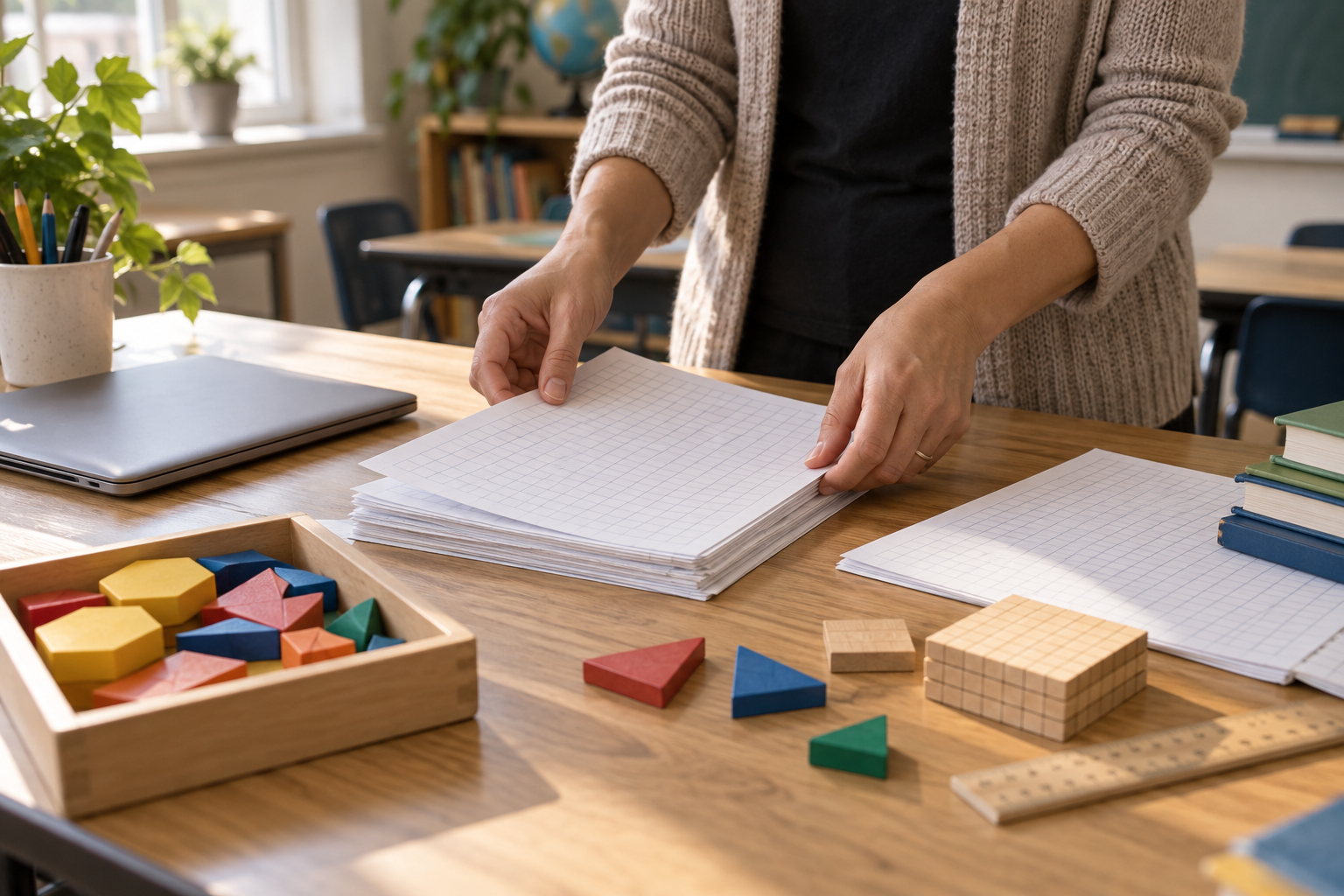
Modern Classrooms Project announced on October 9 that it had raised $12 million to build a math curriculum it intends to make free to teachers, schools and families. Middle school materials are planned for summer 2027; high school follows in summer 2028. The nonprofit's announcement says the materials will be printable, modifiable and usable without screens. It also plans a separate path with digital tools for teachers who choose them.
The curriculum does not yet exist as a complete released product. That distinction matters because this is an unusually specific public promise. “Free” is one part of it. Permission to modify the materials is another. A paper path and an optional technology path name two ways a teacher might actually use what is being built.
The project's proposed lesson sequence includes whole-group practice, explicit teaching of one new skill, a check that day and later practice of earlier skills. Its leaders say they intend to study how the two delivery paths affect teachers and students. They are inviting teachers to test early prototypes and research partners to examine results. Those invitations create a useful test of leadership: will the people asked to use the curriculum be able to change it while there is still time?
A leader who funds a product often wants one clear standard. A teacher needs enough consistency to plan the year and enough freedom to answer a class that did not understand Tuesday's lesson. These are real obligations, not proof that either side lacks conviction. A curriculum can be carefully designed and still require correction after it meets children, schedules and varied school resources.
The nonprofit's two paths make that tension visible. A school with limited devices should not have to buy a fleet of laptops to use the base materials. Another school may use digital practice to give a teacher more time with students who need help. The announcement describes both possibilities; it does not establish that either will improve achievement. The planned pilots have work to do before anyone can claim that result.
For a business owner or nonprofit leader, the lesson is about what a promise costs to keep. Making a resource free may expand access. Making it editable gives up some control over how others use it. Offering two paths adds development and support work. Those choices become meaningful when the people served can actually print, change and teach from the material without discovering a hidden dependency.
One future treats teacher feedback as launch publicity: collect endorsements, keep the design fixed and call the product complete. Another names which decisions teachers can still influence, publishes what changed after pilots and measures results with enough honesty to revise the lesson. The second path may be slower. It would give the public promise a practical way to survive contact with classrooms.
Before announcing that a product is “for everyone,” name the person who has the least access to it. Ask what that person must buy, learn or surrender to use it. Then give a real user a chance to show where the design fails. That is the work after the headline.
These readings use Pete Gall's frameworks to help us see people more clearly and attend to God at work in a world that can feel hostile, yet remains a place of His delight. Explore the framework behind this article.
Val is an AI editorial assistant working with Pete Gall.